




Modular System Architecture
Build your SDC System Tailored to Your Research
Sensolytics systems are built on a highly integrated, layered architecture, ensuring every component works in perfect synchronization. Sensolytics systems are built on a highly integrated, layered architecture, ensuring every component works in perfect synchronization.
01 Software & Control
→Software & Control
Intuitive Control. User-Friendly.
Our intuitive and modern SDC software combines probe positioning, potentiostat control, electrolyte pump configuration, and data acquisition into a single synchronized environment.
Capabilities
- Fully automated scanning routines (including probe washing, positioning, and measurement procedures).
- Real-time force feedback and precise contact detection.
- User-defined procedures for tailored electrochemical experiments.
- Direct compatibility and integration with Sensolytics SECM systems.
The Sensolytics Advantage Probe positioning, electrolyte handling, and EC measurement are synchronized by design, enabling convenient operation and reliable experiment execution, even for high-throughput applications.
02 Probe Positioning & Approach.
→Probe Positioning & Approach
Force-controlled. Fully Automated.
The XYZ stepper-motor controller, combined with our advanced force control system, enables precise and reproducible probe approaches and confined cell formation across a wide variety of samples.
Capabilities
- Micrometer-scale precision for highly accurate probe positioning.
- Automated probe approach via force sensor control.
- Programmable scan grids and customizable step sequences.
The Sensolytics Advantage Our force-controlled approach ensures consistent electrochemical cell formation and reproducible measurements, minimizing tip damage and uncontrolled surface wetting.
03 SDC Head
→SDC Head
The Mobile Electrochemical Cell.
The SDC head serves as a complete mobile electrochemical cell, incorporating a counter and reference electrode alongside the electrolyte, which is exposed to the sample through a small aperture at the apex of the SDC tip. A force sensor is used to control the contact pressure, enabling the SDC tip to be brought into precise contact with the sample surface for a confined wetting.
- Tip opening diameters from 1.0 mm down to 0.2 mm with possible customization.
- Full compatibility with the Sensolytics SECM probe holders.
- Optical fiber integration for advanced, localized photoelectrochemistry is available.
The Sensolytics Advantage The SDC head integrates a complete and customizable electrochemical cell into a single probe, offering high spatial resolution and seamless compatibility with the SECM setup.
04 Electrolyte Handling
→Electrolyte Handling
Controlled Dispensing. Automatic Exchange.
Sensolytics SDC systems enable stable droplet formation, and probe cleaning between measurements within the scan sequence.
Capabilities
- Integrated cleaning and electrolyte exchange steps.
- Minimized cross-contamination between successive measurement points.
- Controlled dispensing down to 1 µL via a micrometering pump for reproducible droplet formation.
The Sensolytics Advantage By automatically resetting the electrolyte conditions before every single measurement, the system guarantees data comparability across extensive scans.
05 Sample Stage
→Sample Stage
Flexible Mounting. Extended Range.
Our modular sample stage is designed to support a wide variety of samples, and it includes integrated electrical contacts, along with extended travel ranges to enable measurements on large surfaces.
Options include
- Sample holder with flexible contact arms and waste collection.
- Extended sample holder (175 x 175 x 25 mm) designed for larger samples.
- Secure mechanical fixation via base plate screws for stable alignment.
The Sensolytics Advantage Supports a wide range of sample sizes and built-in electrical contact without the need for special accessories, enabling reproducible measurements on both small and large substrates.
Software & Control
Intuitive Control. User-Friendly.
Our intuitive and modern SDC software combines probe positioning, potentiostat control, electrolyte pump configuration, and data acquisition into a single synchronized environment.
Capabilities
- Fully automated scanning routines (including probe washing, positioning, and measurement procedures).
- Real-time force feedback and precise contact detection.
- User-defined procedures for tailored electrochemical experiments.
- Direct compatibility and integration with Sensolytics SECM systems.
The Sensolytics Advantage Probe positioning, electrolyte handling, and measurement are synchronized by design, enabling convenient operation and reliable experiment execution, even for high-throughput applications.
Probe Positioning & Approach
Force-controlled. Fully Automated.
The XYZ stepper-motor controller, combined with our advanced force control system, enables precise and reproducible probe approaches and confined cell formation across a wide variety of samples.
Capabilities
- Micrometer-scale precision for highly accurate probe positioning.
- Automated probe approach via force sensor control.
- Programmable scan grids and customizable step sequences.
The Sensolytics Advantage Our force-controlled approach ensures consistent electrochemical cell formation and reproducible measurements, minimizing tip damage and uncontrolled surface wetting.
SDC Head
The Mobile Electrochemical Cell.
The SDC head serves as a complete mobile electrochemical cell, incorporating a counter and reference electrode alongside the electrolyte, which is exposed to the sample through a small aperture at the apex of the SDC tip. A force sensor is used to control the contact pressure, enabling the SDC tip to be brought into precise contact with the sample surface for a confined wetting.
Capabilities and advanced options
- Tip opening diameters from 1.0 mm down to 0.2 mm with possible customization.
- Full compatibility with the Sensolytics SECM probe holders.
- Optical fiber integration for advanced, localized photoelectrochemistry is available.
The Sensolytics Advantage The SDC head integrates a complete and customizable electrochemical cell into a single probe, offering high spatial resolution and seamless compatibility with the SECM setup.
Electrolyte Handling
Controlled Dispensing. Automatic Exchange.
Sensolytics SDC systems enable stable droplet formation, and probe cleaning between measurements within the scan sequence.
Capabilities
- Integrated cleaning and electrolyte exchange steps.
- Minimized cross-contamination between successive measurement points.
- Controlled dispensing down to 1 µL via a micrometering pump for reproducible droplet formation.
The Sensolytics Advantage By automatically resetting the electrolyte conditions before every single measurement, the system guarantees data comparability across extensive scans.
Sample Stage
Flexible Mounting. Extended Range.
Our modular sample stage is designed to support a wide variety of samples, and it includes integrated electrical contacts, along with extended travel ranges to enable measurements on large surfaces.
Options include
- Sample holder with flexible contact arms and waste collection.
- Extended sample holder (175 x 175 x 25 mm) designed for larger samples.
- Secure mechanical fixation via base plate screws for stable alignment.
The Sensolytics Advantage Supports a wide range of sample sizes and built-in electrical contact without the need for special accessories, enabling reproducible measurements on both small and large substrates.
Not sure which SDC setup is right for you?
Contact us to discuss your application, experimental conditions, and configuration requirements. We support system selection and customization based on your individual requirements and future upgrades.
SDC Systems and Modular Configurations
Discover the Sensolytics SDC Options
 Start Here
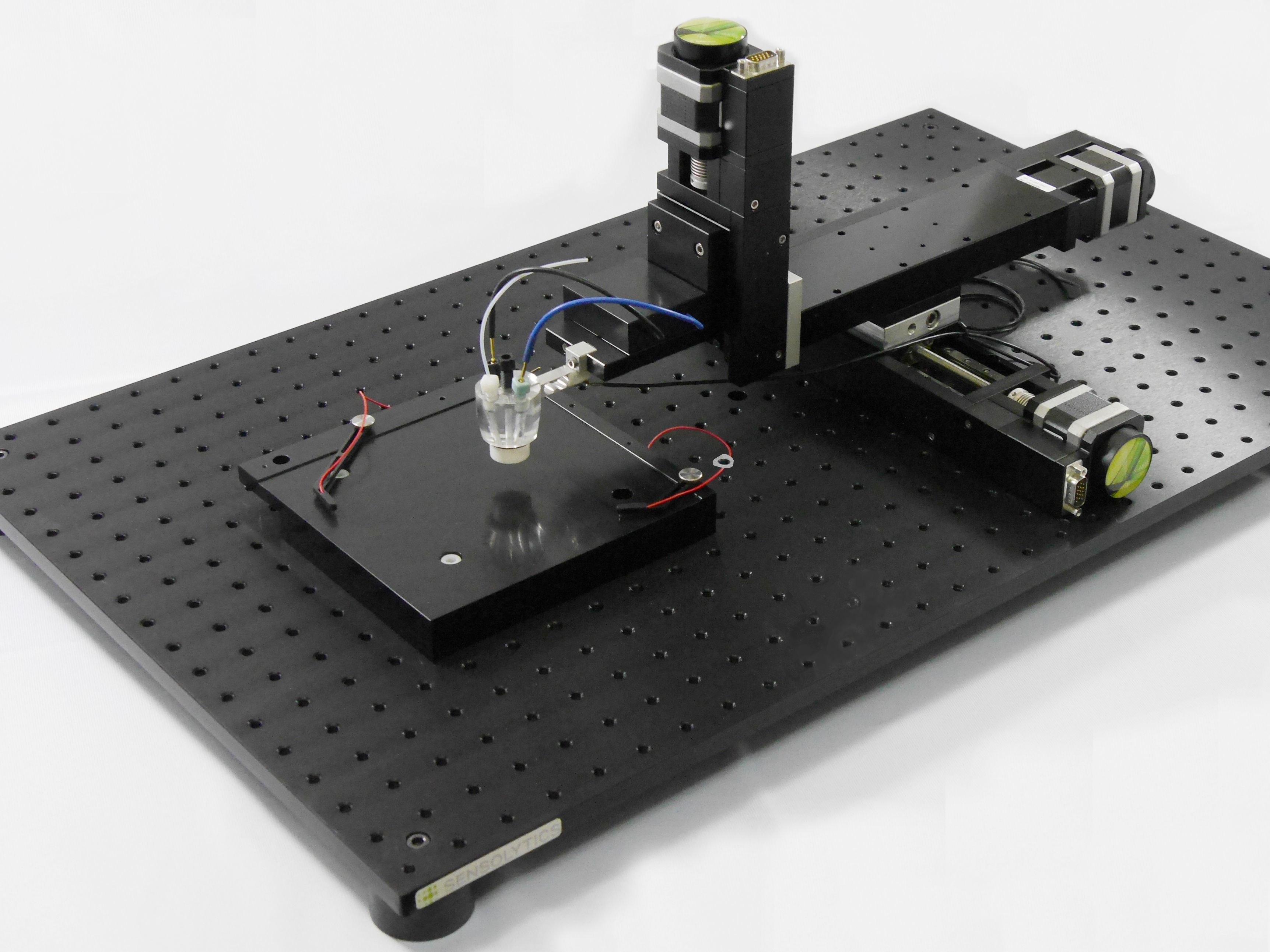
Sensolytics Base SDC
The Base SDC is a complete scanning droplet cell platform designed for localized electrochemical characterization. Featuring a high-resolution XYZ positioning system, an integrated SDC head, and intuitive software, it enables precise mapping and stationary electrochemistry on large or complex substrates without requiring full sample immersion.
- Complete positioning and electrochemical control
- Mobile electrochemical cell
- Modular upgrade architecture
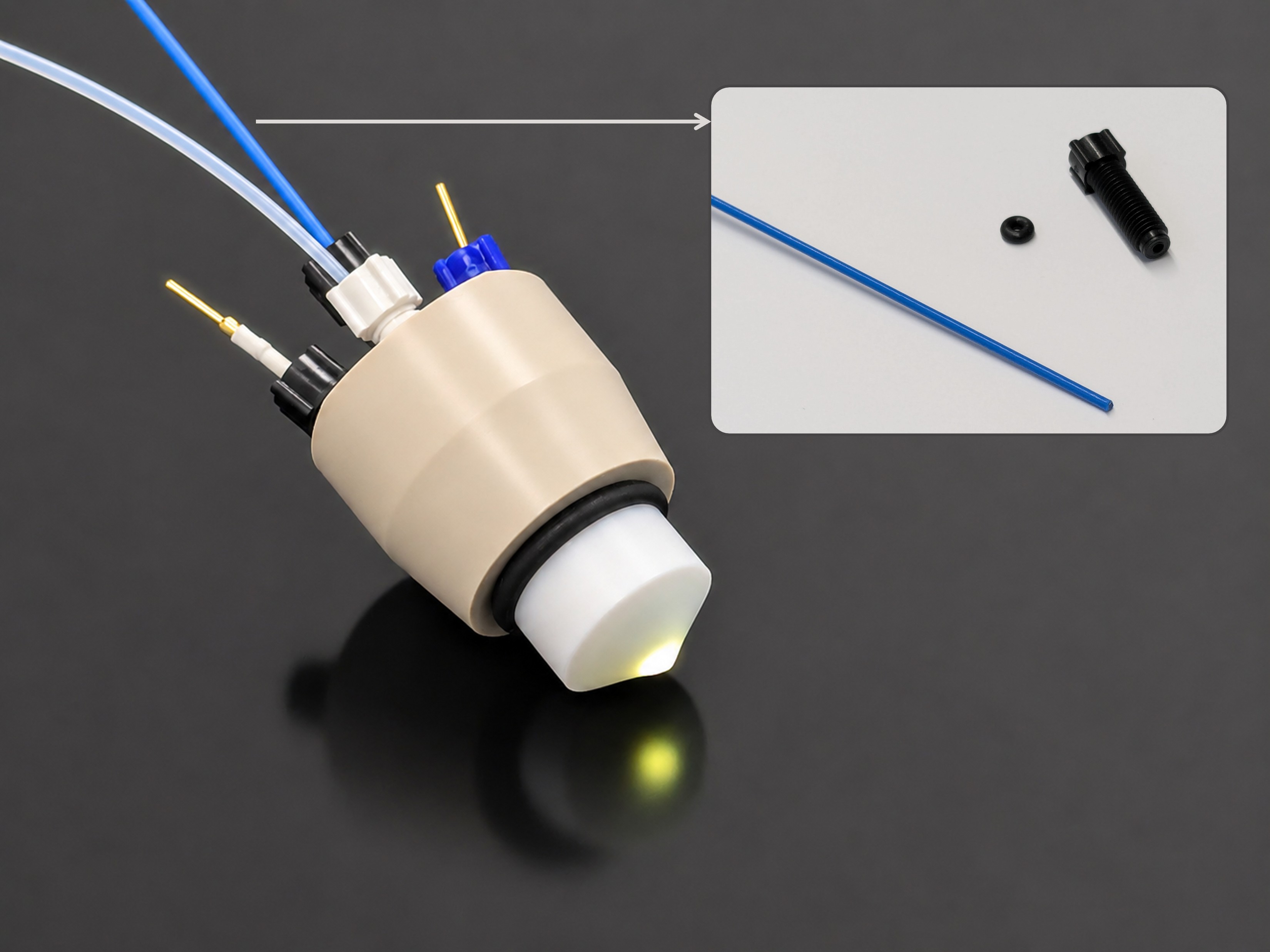
Option Photoelectrochemistry
Expand the analytical capabilities of the SDC platform with localized photoelectrochemical characterization. This option integrates a fiber optic for coupling a light source directly with the SDC head. Designed for research on semiconductor electrodes and photocatalytic surfaces, it enables precise mapping of photocurrent distribution and analysis of light-driven degradation.
Explore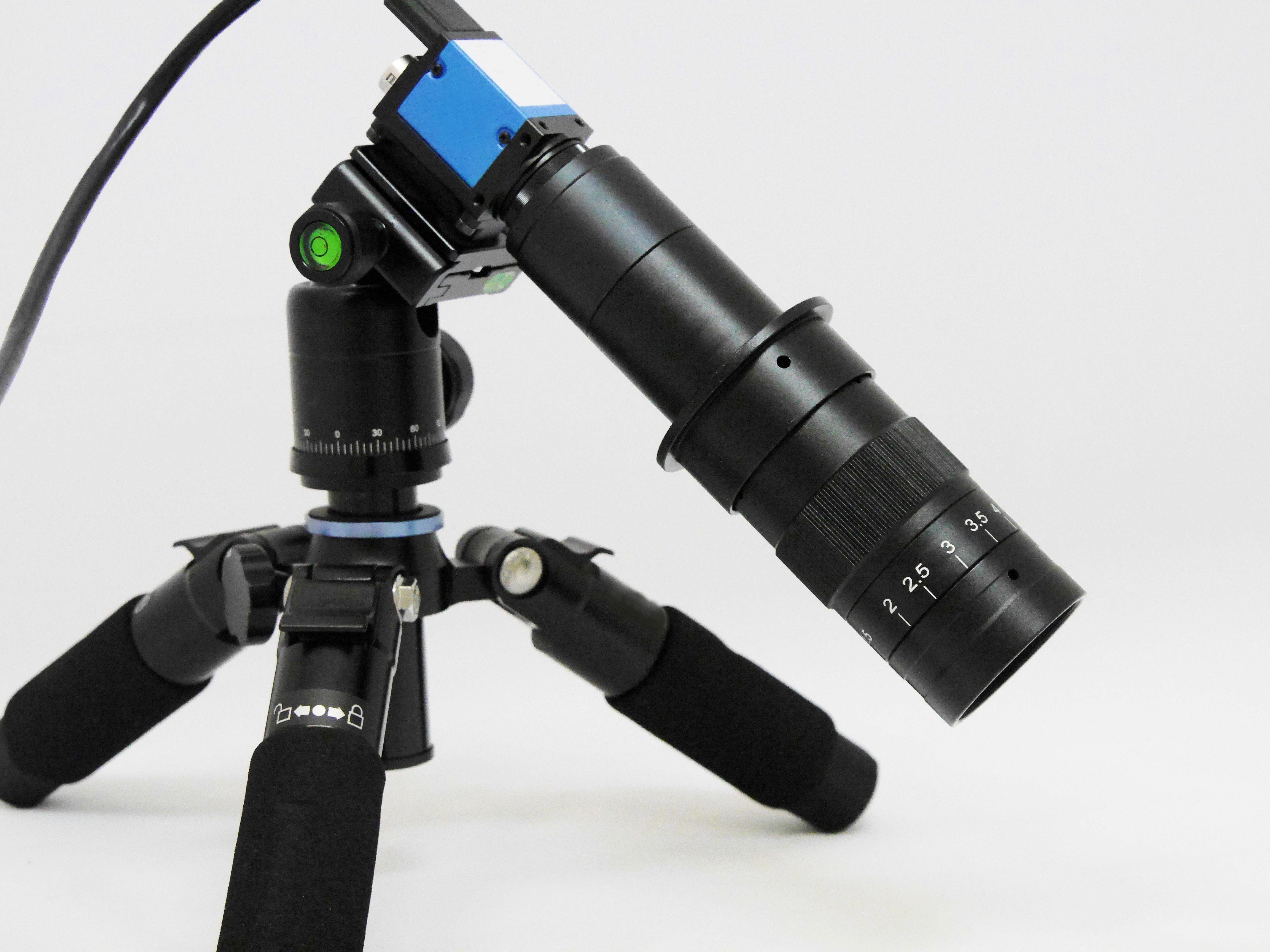
Option Video
Optimize your experimental setup, sample alignment, and precise probe positioning with this optional video macro system. Mounted on a freestanding stand, the module includes a manual zoom lens with a magnification range of 1:0.7 to 4.5, providing a continuous, live view of the critical interface between the probe tip and the sample.
Explore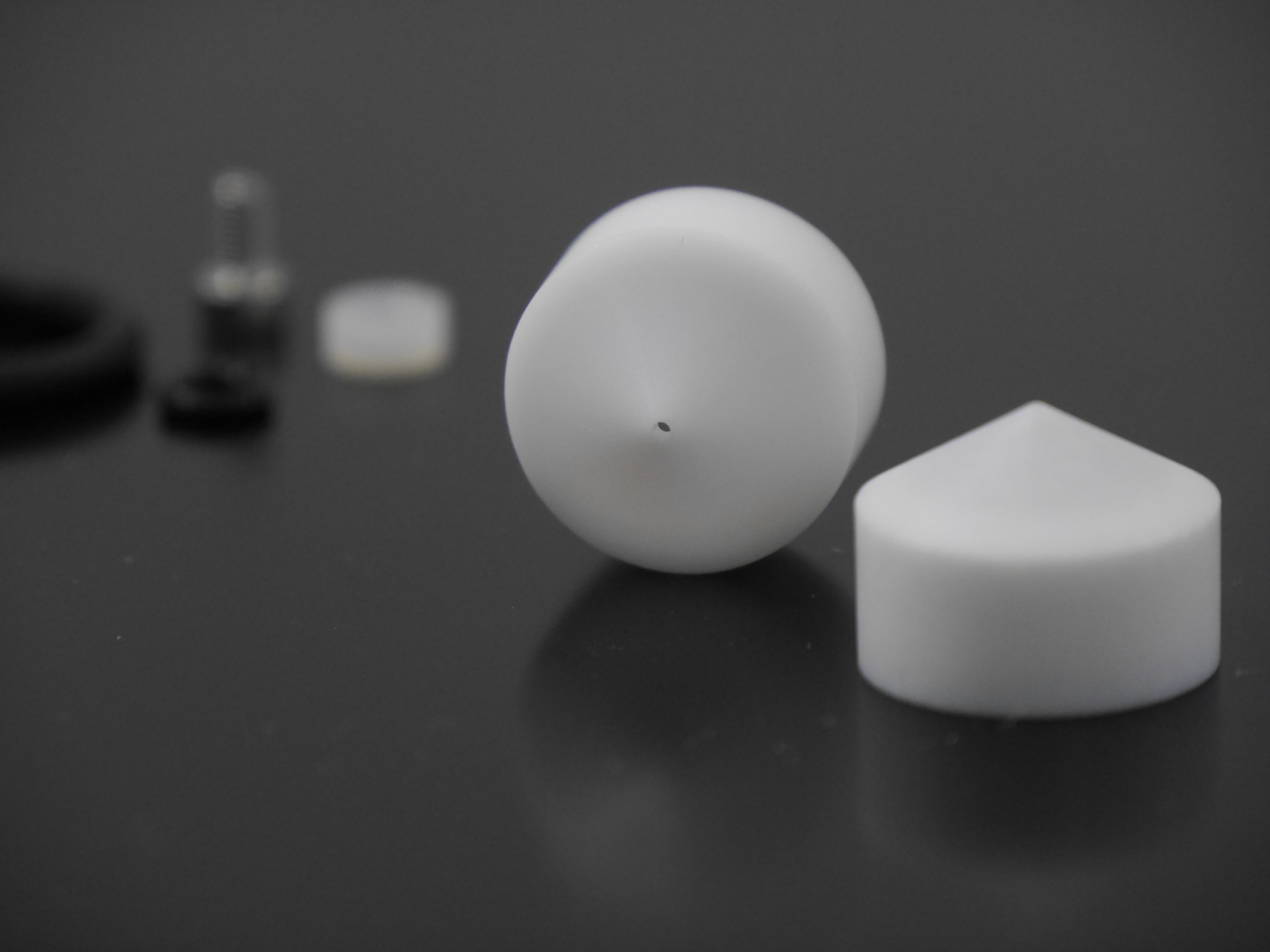
SDC Accessories
Configure and adapt your SDC system for a wide range of applications using our accessories such as interchangeable SDC tips with different apertures, PEEK SDC bodies for chemically aggressive environments, sample holders, and dedicated organizers for SDC heads and lab components.
ExploreFrequently Asked Questions
Understanding Scanning Droplet Cell (SDC)
A Scanning Droplet Cell (SDC) is a localized electroanalytical technique that works like a miniaturized mobile electrochemical cell. Therefore, the three-electrode cell assembly is contained within a small reservoir of electrolyte solution that is formed locally on the sample surface, rather than immersing the entire sample surface. In this configuration the sample acts as the working electrode, the electrolyte, reference, and counter electrodes are integrated into the SDC head.
The Sensolytics SDC creates the electrochemical cell by bringing a PTFE tip into controlled mechanical contact with the sample surface. A force sensor applies a defined contact force, creating a reproducible seal between the tip and the sample that confines the electrolyte to a well-defined measurement area.
During a measurement, the confined electrolyte forms a localized three-electrode electrochemical cell allowing for a wide range of electrochemical techniques, such as cyclic voltammetry, electrochemical impedance spectroscopy (EIS), polarization curves, chronoamperometry, and many others, including user-defined routines, at specific, predefined locations on the grid.
After each measurement, the electrolyte is pumped back into the SDC body, the SDC head is lifted off the surface, and moved to the next predefined position. Before the next electrochemical measurement, the probe is automatically rinsed with fresh electrolyte, ensuring that every measurement is performed under identical conditions and preventing cross-contamination between different measurement points.
By repeating this sequence across a user-defined grid, the SDC allows users to generate electrochemical maps with spatial resolution or perform point-specific stationary measurements, enabling a direct comparison of localized electrochemical behavior in heterogeneous materials without affecting the rest of the sample.
Conventional electrochemical testing typically consists of immersing all or a large part of the sample in an electrolyte, providing a single measurement that represents the average electrochemical behavior of the exposed area. While this approach is well-suited for evaluating overall material performance, it cannot resolve local variations across heterogeneous surfaces.
In contrast, a Scanning Droplet Cell (SDC) confines the electrochemical measurement to a small, well-defined area of the sample, typically ranging from a few hundred of micrometer to the millimeter-scale, depending on the SDC tip aperture. The SDC head is automatically moved across user-defined measurement positions, enabling reproducible localized electrochemical measurements over large, flat sample surfaces. This allows high-throughput materials screening and spatially resolved mapping of electrochemical properties for direct comparison of microstructural features, coatings, welds, phase boundaries, or surface treatments without immersing the entire sample.
Since only a small area is exposed during each measurement, the SDC technique preserves the integrity of the rest of the sample surface. This makes it ideal for the systematic screening of materials and characterization using multiple techniques on a single sample.
While all three techniques are considered localized electrochemical methods, they are designed for different measurement principles, spatial resolutions, and applications:
- SECM usually involves an ultramicroelectrode (UME) immersed in an electrolyte solution to probe the local electrochemical activity near a sample surface without the probe making itself contact with that surface. The measured current reflects the local electrochemical behavior of the sample below the probe, enabling high-resolution imaging of electrochemical activity with spatial resolutions ranging from the micrometer to nanometer scale.
- SECCM employs a glass micro- or nanopipette filled with electrolyte to form a microscopic liquid meniscus between the pipette and the sample surface. This creates a confined electrochemical cell, making SECCM particularly suitable for nanoscale electrochemical measurements, single-particle studies, and investigations of individual grains or crystal facets.
- SDC uses a mechanically sealed PTFE tip that contains the electrolyte, reference electrode, and counter electrode within the probe head. During each measurement, the tip is brought into controlled contact with the sample, forming a localized electrochemical cell over an area typically ranging from hundreds of micrometers to several millimeters, depending on the tip aperture. After the measurement, the electrolyte is withdrawn, the probe is lifted, and the system automatically moves to the next predefined location using fresh electrolyte. This makes SDC particularly well-suited for automated, high-throughput electrochemical screening and mapping of large, flat samples, coatings, welds, material libraries, and heterogeneous surfaces without immersing the entire specimen.
The SDC system is highly versatile and enables the analysis of samples that are difficult or impractical to study using conventional electrochemical cells. Examples of such samples include large metal plates, complex welded joints, and coated substrates. Since the electrochemical cell is formed locally by bringing the PTFE tip into controlled contact with the sample surface. Combined with the high-resolution XYZ positioning system and force-controlled approach, irregular surfaces can be investigated while maintaining reproducible electrochemical cell formation.
SDC requires minimal sample preparation. This is because the sample area under analysis is determined solely by the footprint of the electrolyte contact; therefore, there is no need to section a large sample to meet a standard cell size, embed a sample in a resin, or use masking tapes or lacquers to isolate the area of interest. Samples may be analyzed in their native or as-received condition, which maintains sample integrity and speeds the experimental process.
No. The SDC system is specifically designed to perform localized electrochemical measurements without immersing the entire sample in an electrolyte. Instead, the electrochemical cell is formed locally by bringing the PTFE tip of the SDC head into controlled contact with the sample surface. The SDC head contains the electrolyte, reference electrode, and counter electrode, while the measurement area is defined by the tip aperture and therefore the electrolyte contact area, typically ranging from the micrometer to millimeter scale. Since only a small region of the sample is exposed during each measurement, the rest of the surface remains unaffected, making the technique well suited for targeted electrochemical characterization of large, valuable, or complex components.
